


Reformer versus mat Pilates - which suits you?

A Reformer can look a little intimidating at first: a moving carriage, springs, straps and a foot bar. A mat, meanwhile, may seem simpler. Yet when it comes to Reformer versus mat Pilates, neither is the ‘better’ choice for everyone. The right place to begin is the one that helps you move with confidence, breathe more deeply and build a practice you genuinely want to return to.
Both forms are rooted in the same thoughtful Pilates principles: controlled movement, posture, core connection, mobility and awareness of how your body feels. The experience, however, can be quite different. Understanding those differences can make it easier to choose a class that supports your body, your goals and your current season of life.
Reformer versus mat Pilates: the key difference
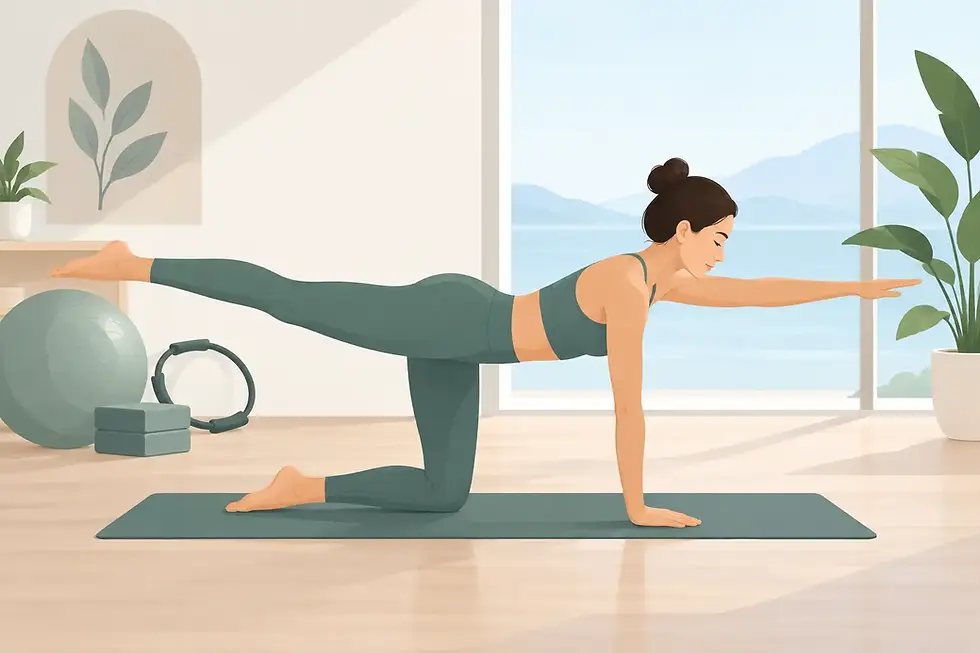
Mat Pilates is performed primarily on the floor using your own body weight. A class may include small props such as a resistance band, Pilates ball or light hand weights, but the mat is the foundation. Without a machine to guide the movement, you learn to create stability from within, noticing your alignment, breathing and control.
Reformer Pilates uses a purpose-built bed-like machine with a sliding carriage and adjustable springs. The springs can add resistance to make a movement more challenging, or provide support that makes a movement feel more accessible. Straps, a foot bar and a moving carriage create many options for working the whole body in different positions.
This is not simply a question of easy versus hard. A well-taught mat class can be wonderfully demanding, while the Reformer can offer valuable assistance for someone new to movement, returning after time away or working carefully with limited mobility. The challenge comes from the exercise, the spring setting, the pace and, most importantly, the quality of your control.
What Reformer Pilates can offer
The Reformer is especially useful for helping you feel the relationship between your body and the movement. The carriage gives immediate feedback: if you press more strongly through one foot, pull unevenly through the straps or lose control on the return, you can often feel it straight away. That feedback can build body awareness without judgement.
Because the springs are adjustable, Reformer work can be highly personalised. Lighter springs may support a movement while asking for careful stability. Heavier springs can create more resistance for the legs, arms and back. This adaptability is one reason it suits a wide range of bodies and experience levels.
For many people, Reformer Pilates feels motivating because it offers variety. You might work lying down, kneeling, standing, sitting or side-lying, using the carriage and straps in ways that challenge balance, coordination, strength and mobility. It can be particularly enjoyable if you like clear physical feedback and a sense of progression over time.
Personalised Reformer sessions also allow time for close guidance. In a 1-to-1 or 2-to-1 setting, your instructor can adapt exercises around your goals, movement history and how you feel on the day. That may be helpful if you are rebuilding confidence after a break from exercise, managing stiffness from long hours at a desk or wanting more focused support with technique.
There are trade-offs, of course. Reformer sessions are usually a greater financial investment than mat classes, and access depends on a studio with the equipment. If you travel frequently or need a practice that fits easily into a spare corner of your home, the mat has a practical advantage.
Why mat Pilates is far from the easier option
Mat Pilates asks you to work with gravity and your own body weight. With no carriage beneath you and no springs to assist, there is nowhere to hide from the small stabilising muscles that help you stay steady and controlled. This can make familiar-looking movements surprisingly powerful.
A mat practice is an excellent way to develop a strong foundation. You learn how to organise your posture, connect breath to movement and recognise the difference between gripping through the shoulders and finding support through the centre of your body. Those skills carry into daily life, from lifting shopping bags to sitting more comfortably at your desk.
It is also the most accessible format for building consistency. Once you have a mat and a little clear floor space, you can practise almost anywhere. A live-streamed class can bring the structure, encouragement and sense of connection of a studio session into your home, wherever you are in the world.
Mat Pilates does require careful teaching, particularly for beginners. An instructor’s cues can make the difference between simply copying a shape and understanding where the movement should come from. Look for classes that offer options rather than treating every exercise as a test. You should be able to rest, adapt or choose a gentler variation without feeling that you have fallen behind.
Which is better for strength, flexibility and posture?
Both can improve strength, mobility and posture when practised consistently. The more useful question is what kind of support will help you practise well.
If you want to build strength with a wide range of resistance options, Reformer Pilates may feel particularly rewarding. The springs can challenge your legs, arms, back and core while encouraging slow, precise movement. The machine can also support greater range in certain exercises, helping you explore mobility with control rather than forcing a stretch.
If your goal is to feel more connected to your body and establish a sustainable routine, mat Pilates may be exactly what you need. It teaches you to generate control without relying on equipment, and it can be deeply effective for core endurance, balance, posture and overall movement quality.
Neither format promises a quick fix for pain, injury or postural changes. Pilates can be a supportive part of looking after your body, but persistent pain, new symptoms or a diagnosed condition deserve appropriate advice from a qualified healthcare professional. A good instructor will also want to know about relevant injuries, pregnancy, surgery or health concerns so that sessions can be adapted thoughtfully.
Choosing the right starting point for you
Choose a Reformer session if you would value hands-on guidance, enjoy using equipment or want a more tailored approach. It can be a lovely starting point for beginners because the springs and instructor support can help you understand movements clearly. It can also keep experienced practitioners engaged through endless variations and more specific strength work.
Choose mat Pilates if flexibility matters, you prefer a simple set-up or you want to build a steady home practice. It is an especially good choice for people who want movement to become part of everyday wellbeing rather than another appointment to squeeze into a busy week.
You do not have to commit to one forever. Many people enjoy mat classes for the convenience and grounding simplicity, then use Reformer sessions to deepen their technique or focus on individual goals. Others begin on the Reformer to gain confidence, then find that mat work helps them trust their own strength. Your needs can change, and your Pilates practice can change with them.
The experience matters as much as the equipment
The best class is not the one with the most impressive equipment or the toughest-looking exercises. It is the one where you feel seen, safely challenged and able to listen to your body. You should leave feeling more spacious, stronger and more aware of how you move, rather than depleted or pressured to perform.
At Reform Revitalise Release, sessions are designed to meet you where you are, whether you are stepping onto a Reformer for the first time, returning to a mat after a long pause or looking for a practice that supports both body and mind. Progress can be quietly powerful: a little more ease in your shoulders, stronger legs on the stairs, a fuller breath and a growing sense of trust in yourself.
Start with the format that feels most accessible now. Give yourself permission to learn slowly, ask questions and notice the small changes. The aim is not to choose perfectly, but to find movement that helps you feel at home in your body.


Comments