

Are Two-to-One Pilates Sessions in Southam Right?

There is something quietly powerful about learning to move alongside someone you trust. Two-to-one Pilates sessions Southam give you the focused support of a personalised Reformer session, with the encouragement, laughter and shared commitment that can make movement feel easier to return to each week.
Whether you come with a partner, friend, sibling or colleague, this is not about keeping up with one another. It is about creating time to move better, breathe deeper and feel stronger, with guidance shaped around both of your bodies and your individual goals.
What is a two-to-one Pilates session?
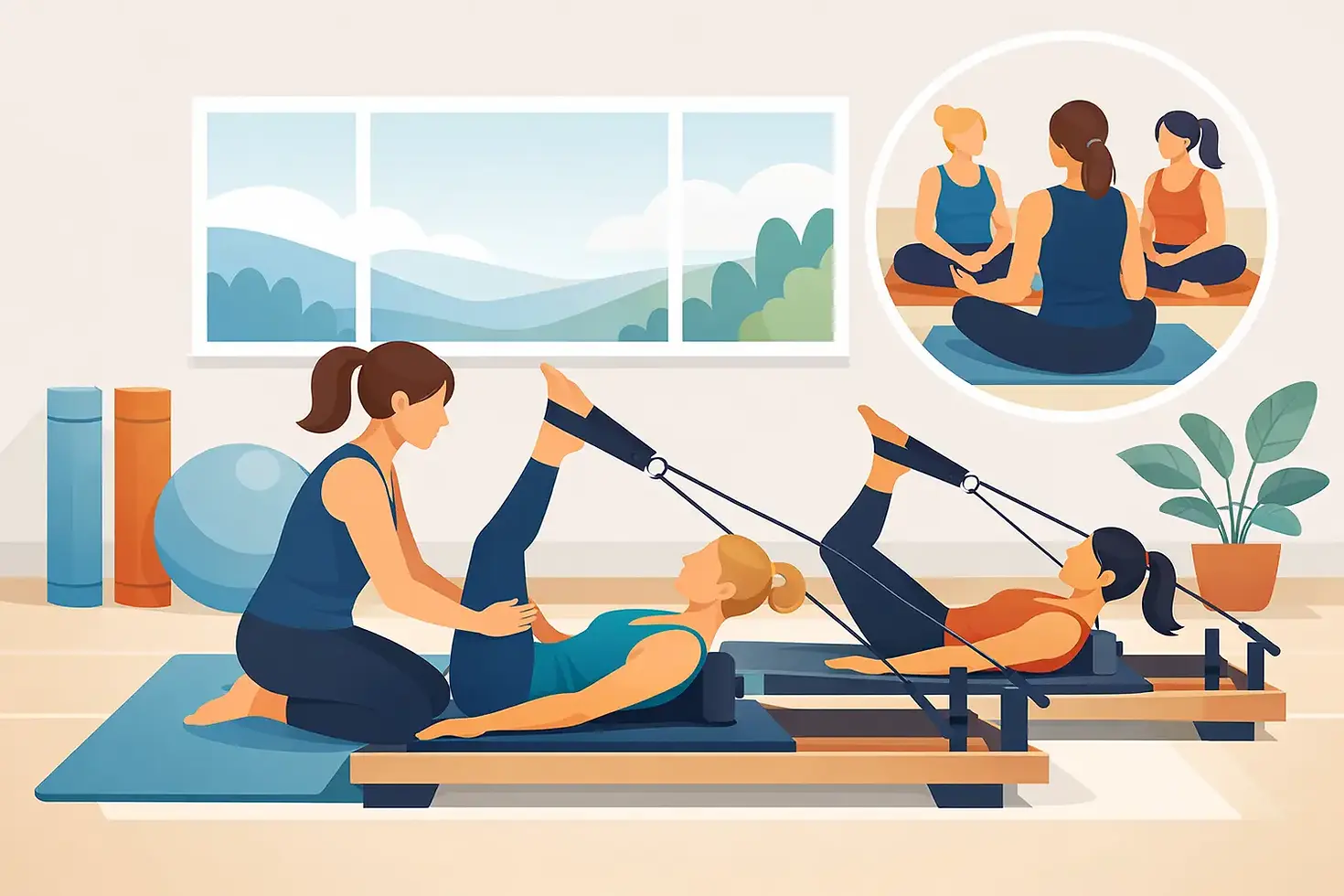
A two-to-one session is a personalised Pilates appointment for two people. Rather than joining a larger class, you share the time, equipment and attention of your instructor with one other person. On the Reformer, springs, straps and carriage movements can be adjusted to suit each of you, so the same session can still feel appropriately challenging and supportive.
You may begin with similar aims, such as improving posture, building core strength or easing the stiffness that arrives after long days at a desk. But you do not need to have identical bodies, fitness levels or experience. One person might be completely new to Pilates while the other has attended classes before. With thoughtful coaching, both can work at a level that feels right for them.
The format sits comfortably between a one-to-one session and a group class. It offers more individual attention than a busy class, while the shared experience can make it feel more social, relaxed and affordable than booking alone.
Why train with another person?
Consistency is often the hardest part of any wellbeing routine. When someone is expecting you, it can be easier to protect that hour in your diary. A two-to-one session creates a gentle sense of accountability without turning exercise into a competition.
For many people, it also takes away the uncertainty of trying something new. Arriving with a familiar face can make the first session feel less daunting, particularly if you are returning to movement after a break, recovering confidence following a busy or stressful period, or simply unsure what a Reformer Pilates session involves.
There is a practical benefit too. You can share the cost of personalised instruction while still receiving close observation and clear corrections. Your instructor has the space to notice how you are moving, offer alternatives where needed and help you understand the purpose behind each exercise.
Just as importantly, shared Pilates can bring a little more joy to your week. You may leave feeling taller, steadier and pleasantly worked, then talk about the movements you found challenging over a coffee or on the journey home. Wellness does not have to be a solitary task.
Two-to-one Reformer Pilates in Southam: who is it for?
Two-to-one Reformer Pilates in Southam can suit a wide range of people. Couples often enjoy it as a healthier way to spend time together. Friends may book to support each other in building a routine. Mothers and daughters, siblings and colleagues can all benefit from a session that feels personal without being intense or intimidating.
It is particularly well suited to people who want more guidance than a group class provides. If you have felt unsure about your technique, find that your body needs careful progression, or want to work towards a specific aim, the smaller setting gives you room to ask questions and move with more awareness.
It can also be a lovely option for experienced Pilates clients. Perhaps you understand the foundations and now want to explore more varied Reformer work, improve control or challenge your strength and stability with greater precision. A shared session does not mean a watered-down session. The resistance, range and pace can be adapted so that each person feels appropriately supported.
That said, it is not always the best choice. If you are managing a complex injury, have very specific rehabilitation needs or would prefer complete privacy, one-to-one Pilates may offer the most focused approach. Equally, if you and your training partner have very different availability or expectations, it may be harder to establish a regular rhythm. The best format is the one that helps you feel comfortable, capable and able to continue.
What happens in a session?
Your first session should begin with a conversation. This is your chance to share what you would like from Pilates, any areas of discomfort, previous injuries, movement experience and how you want to feel in your body. There is no need to arrive already flexible, strong or confident. Honest information helps your instructor tailor the session with care.
From there, you will be guided through purposeful movements on the Reformer. You might work on alignment and breathing first, then explore exercises that support your core, hips, back, shoulders and balance. The Reformer’s adjustable springs can offer assistance when you need to feel a movement clearly, or resistance when you are ready to build strength.
You will not necessarily perform every exercise at the same time or in the same way as the person beside you. One of you may use a lighter spring, a smaller range of movement or an alternative position. Good Pilates teaching respects those differences. The aim is not matching perfectly. It is learning how your own body responds, while sharing the experience.
Sessions can also create a welcome pause from the pace of daily life. Attention is brought back to the breath, the quality of each movement and the feeling of being present in your body. That mindful element can be especially valuable if your shoulders tend to creep upwards, your thoughts are always racing, or stress has become something you carry physically.
How to choose the right Pilates partner
The ideal Pilates partner is not necessarily the person who is most athletic. It is someone whose company helps you feel at ease and who shares a broadly similar commitment to attending regularly. You do not need the same ability, but it helps if you both understand that progress will look different for each of you.
Before booking, have a simple conversation about what you each hope to gain. One of you might want stronger abdominals, while the other wants better mobility or a calmer hour away from work. Those aims can sit happily in the same session. The key is allowing space for both people’s needs rather than assuming one person will lead the experience.
It is also worth agreeing on a realistic frequency. A regular weekly or fortnightly session often gives your body time to build familiarity and confidence. However, a schedule that feels manageable is better than an ambitious plan that quickly becomes another source of pressure.
Making the most of your shared practice
Wear clothing you can move comfortably in and arrive a few minutes early so you do not begin rushed. Let your instructor know if anything has changed since your last session, from a niggling ache to a particularly demanding week. Pilates is most effective when it responds to the person in front of the instructor, not to a fixed plan.
Try to notice small changes rather than chasing dramatic results. Perhaps getting out of a chair feels easier, you can sit through a meeting with less tension, or you feel more aware of your posture while walking. Strength and flexibility matter, but so does the growing trust you develop in your body.
At Reform Revitalise Release, two-to-one sessions are guided with the belief that Pilates should meet you where you are. You and your chosen partner can each receive thoughtful instruction, while enjoying the steady encouragement that comes from moving together.
A shared session can be a practical commitment to your wellbeing, but it can also become a restorative ritual: time set aside to reconnect with your body, encourage someone you care about and leave feeling a little more grounded than when you arrived.


Comments